
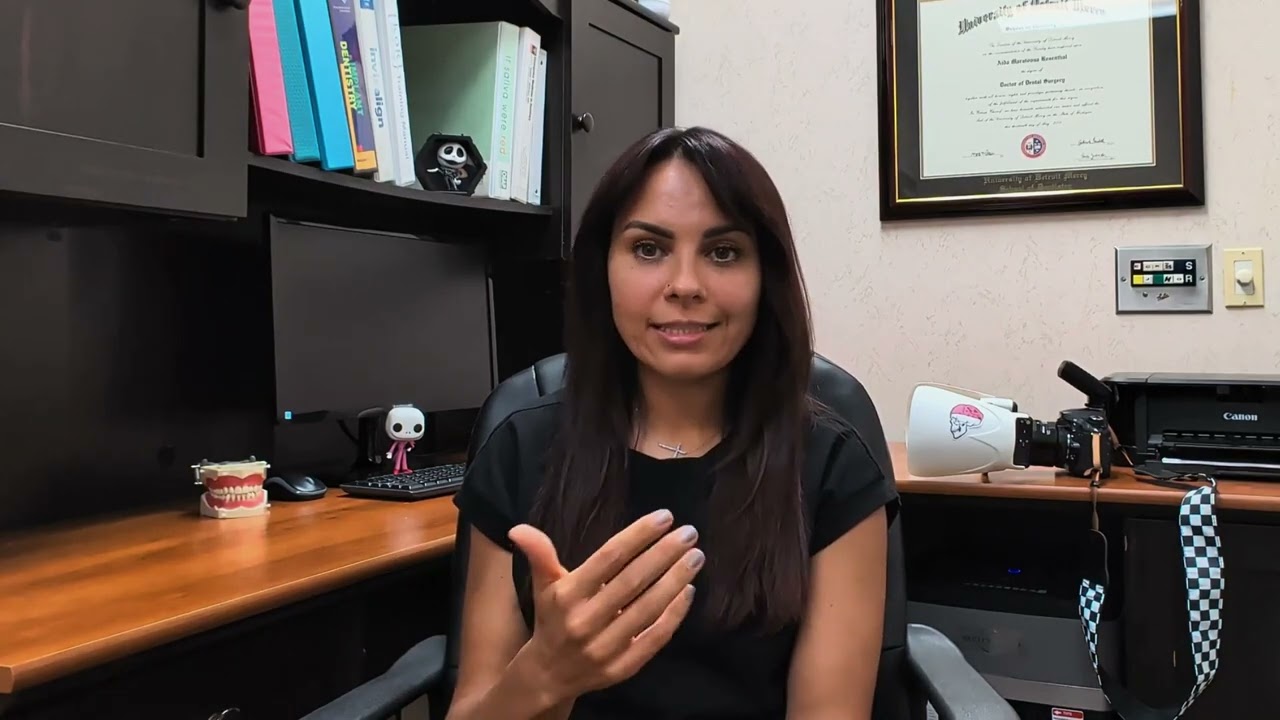
Why might two dentists recommend different treatment plans for the same dental issue?
Two different dentists can recommend two different treatment plans for the same issue. In fact, three different dentists can recommend three different treatment plans for the same issue. We are providers. We are humans. We all have our different philosophies, beliefs, education levels, and backgrounds. We can see the same issue through our own lens, and we can recommend different things depending on what we believe in and what we would want to have done in our own bodies.
Which brings me to the point, and I talk to a lot of my patients about it: You have to find a provider who has a very similar philosophy to you. They believe in the same things you believe, have the same goals you have, or are open to hearing you out and taking your concerns into consideration.
There are a lot of providers, and we're all good at what we do, but we do different things. You have to find someone you truly believe in and agree with because if you go somewhere for a second opinion, it might be very different. You may find someone who agrees with you, and that's great. But try to find a provider from the beginning whose approach you agree with so you don't have to keep looking for a second opinion or a different treatment plan.
How can a dentist's treatment philosophy influence treatment recommendations?
The two biggest differences in the dental world are reactive versus proactive, or conservative versus more aggressive. It comes from the philosophy of a dentist. One is not necessarily better than the other for everyone, but to us, it's a very personal issue.
I'm a very conservative dentist because I believe every time we touch your tooth, we start a time clock on your tooth. Something may eventually have to be replaced. It can get bigger and bigger and become a larger issue, not always, but a lot of the time. I come from a conservative part of dentistry. I love to educate. I like to prevent bigger problems because, with my personal experience and my personal history of dental health, there are a lot of things I wish I knew back then. I might have prevented some of the issues that I have to deal with right now. That's how I look at it.
Now, a lot of dentists are a little bit more aggressive because they believe that people don't always follow up with treatment plans. They may not think you're going to come back, so rather than watch something small, they may want to address it because they're concerned it could become a bigger problem if you disappear for years. Honestly, that's a reality for a lot of people.
If you know that's you, you might prefer to address the issue rather than watch it and try to prevent it from progressing. It's a personal preference for you and a personal preference for your provider.
How do technology, imaging tools, and diagnostic methods influence a dentist's treatment plan?
New technology, imaging tools, and diagnostic methods open so many doors for dentistry. We can see things that we couldn't see before. 3D imaging is amazing. We can see the bone, we can see the root, and we can see so much more. We used to rely on flat, 2D images. Now we have 3D imaging, and we have scanners that let me blow up your tooth on the screen. From this little tooth that you can barely see, now we have this huge tooth on the screen, and we can see different fracture lines or cavities that we might have missed.
To me, there are also a lot of products on the market now that can be used before we see a bigger issue. We have a lot of preventive measures. We have peptides that we can use on your teeth. We can scan and take pictures of your teeth and show you problems that are starting. A few years ago, it might have been, "Hey, it's starting. It's going to happen." Now we're more likely to say, "Hey, it's starting. Let's see what we can do to prevent it from becoming a bigger problem." We have all these cool tools that we can use now, so maybe we can prevent drilling a tooth.
How do a patient's long-term oral health goals affect dental treatment options?
A patient's long-term oral health goals can also affect the treatment plan that we present. I always ask people, "Do you want to keep your teeth? Do you want to keep all your teeth? How attached are you to these things? Do you think you're going to come and see me every six months, or do you think you're going to come and see me every three months when something hurts?"
Your goals and desires are going to dictate the way I plan your treatment as well. If I know you're going to come in, follow up on all the little recommendations, and we can stop your little cavities or maybe remineralize them, I'll be very open and conservative with you. But if you tell me, "Hey, you know I'm not going to floss. I'm not going to brush. Let's just do it," we might take a little bit more aggressive approach.
If your long-term goal is to keep all your teeth, then we're going to try to keep all your teeth. If you have teeth that are severely compromised and you're not attached to keeping them, maybe the best approach is to remove them. It really depends on your goals, which is why I love this open communication between provider and patient. You're driving the car, okay? This is your body. I'm here to give my suggestion, but if you want to go right, I'm going to have to go right with you, and that's okay.
What should patients consider when comparing different dental treatment plans?
First, you have to look at your level of commitment. Can you commit to a bigger treatment plan or a longer treatment plan? There's often an ideal option, but maybe we don't have the mental space for that ideal option. So we have to meet ourselves where we're at.
I'm sure we all know that, right? You try to go into a healthy lifestyle and you jump all in, but then it's just too much for your life, so you stop. You have to start little by little. That's my biggest suggestion. Just check yourself. Be honest with yourself. Where are you with that commitment? Can you follow through? Does it match the values for your life? Is it something that you're still going to feel passionate about in a month or not? Follow up with something that resonates with your beliefs more than the provider's beliefs.
How does personalized dental treatment planning address individual patient needs?
The way we do our treatment plans is very customized. We work with you and take your individual preferences into consideration.
A treatment plan can be customized to your timeline and can be customized to your finances. There are things that sometimes we want to do as providers that you cannot do as patients. So we can figure out what's priority one, two, and three and how many steps the treatment plan is going to take.
Two people can have very different treatment plans for very similar issues. One wants to come in one day and get everything done, and another wants to stretch it out. So we have to figure out what we're doing first and what we're doing second.
That's what I love about my approach. I work with you. I look at you as an individual. I already forgot who came before you and what I recommended to them. It might have been the same issue, but now you and I are having this different conversation. So I'm trying to tailor my treatment plan to your lifestyle.
Understanding your dental care options is an important part of protecting your oral health. Contact us at (586) 203-3057 or email [email protected] with any questions.